What we read
The FDA Warning Letters database for the period September 2024 through April 2026, filtered for actions citing 21 U.S.C. § 331 (misbranding and adulteration) against research-chemical and peptide vendors; DOJ press releases for the same period, filtered for charges referencing peptides, GLP-1 receptor agonists, or "research compounds"; contemporaneous reporting on The Peptide Catalog and Muscle and Brawn; and the publicly posted minutes from the FDA Pharmacy Compounding Advisory Committee meetings of October 2024 and April 2026.
Why the timeline matters
The US research-peptide market in May 2026 is structurally different from the same market in late 2024. Three forces converged: the criminal-case track against vendors that mixed scheduled substances into research catalogs; the FDA Warning Letter track against vendors making unapproved-drug claims; and the 503A compounding track that narrowed what compounding pharmacies could legally produce. Each track moved on a different schedule. The combined effect is what closed the top of the market.
A reader buying research peptides in May 2026 is buying in a smaller, more-disciplined catalog than the one that existed eighteen months earlier — and the regulatory environment continues to move. Knowing the chronology is the difference between reading a vendor's COA correctly and missing the context that explains why the vendor exists at all.
_(8295506986).jpg)
The chronology
| Date | Action | Track |
|---|---|---|
| Oct 2024 | FDA PCAC vote: tirzepatide added to "do not compound" list under 503A | Compounding |
| Dec 2024 | First wave of Warning Letters citing GLP-1 misbranding | Warning Letters |
| Mar 2025 | DOJ announces SARMs+testosterone investigation expansion | Criminal |
| Jun 2025 | FDA raid on Amino Asylum operations | Criminal |
| Sep 2025 | 50+ Warning Letters issued in single enforcement sweep | Warning Letters |
| Mar 2024 | Paradigm Peptides operations cease during federal investigation | Criminal |
| Dec 2025 | Paradigm Peptides guilty pleas entered | Criminal |
| Mar 2026 | Gram Peptides + Prime Sciences Warning Letters | Warning Letters |
| Mar 2026 | Peptide Sciences ceases operations | Criminal (pressure) |
| Apr 2026 | FDA PCAC reaffirms compounding restrictions on GLP-1 class | Compounding |
| 15 Apr 2026 | FDA removes 12 peptides from the Category 2 "do not compound" list | Compounding |
| 23-24 Jul 2026 | PCAC recommends 6 of 7 peptides for the 503A Bulks List, against FDA staff advice | Compounding |
| 30 Jul 2026 | Paradigm Peptides owner sentenced to 70 months, $5M money judgment, forged COAs admitted | Criminal |
| Jul 2026 | Health Canada wins permanent injunction against Canlab Research | International |
Track 1: the criminal cases
The criminal-case track is the one that closed three of the top five US peptide vendors by traffic. The cases share a structural feature: each began as a controlled-substances investigation rather than as a peptide-specific action.
Amino Asylum (June 2025). Federal authorities executed search warrants on Amino Asylum operations following a multi-year DOJ investigation. The charges concerned SARMs labeled products that contained testosterone — a Schedule III controlled substance under 21 U.S.C. § 802(41). The peptide catalog was not the formal subject of the action, but the operations ceased simultaneously. The vendor's audience — likely 200,000+ monthly visitors at peak — migrated within weeks.
Paradigm Peptides (operations ceased March 2024, sentenced 30 July 2026). This is the case that went furthest, and the only one in this article with a sentencing record. Owner Matthew Kawa was sentenced to 70 months in federal prison on 30 July 2026, with a $5 million money judgment. His sister and main employee Jennifer Stechkober received 16 months. Both pleaded guilty to introducing unapproved new drugs into interstate commerce with intent to defraud and mislead. Kawa admitted the company forged laboratory certificates, sold products it never tested, and imported from China and India while advertising US manufacture. Government testing of six compounds sold as SARMs found all six contained testosterone. The business ran 2019 to 2024 and reached roughly 54,000 customers in 80+ countries, continuing after FDA warning letters in 2020 and 2022. The verification implications are in forged COAs and a 70-month sentence. The full case record is on the Paradigm vendor profile.
Peptide Sciences (March 2026). The most recent of the three is unusual in that the formal cause was not a single criminal action but a quality collapse followed by federal pressure. We documented the COA trail in our Janoshik 7,164-tests purity analysis: 37 retatrutide samples failed Janoshik testing across 15 months, culminating in a counterfeit identification by Janoshik (mass-spec mismatch). Federal pressure followed the public quality data. The operations ceased on March 6, 2026.
The pattern across all three is the same: the formal cause of shutdown was not the peptide catalog. The catalog ceased operating because the parent operation was the formal target of action that implicated controlled substances or interstate misbranding.
Track 2: the Warning Letters
The Warning Letter track moved on a different cadence. Warning Letters are administrative — they cite specific marketing language, claims, or practices and require a response. They are not criminal, but they create the public record that often precedes criminal action.
December 2024 — first GLP-1 wave. The earliest Warning Letters in the period named vendors selling research-labeled GLP-1 compounds (semaglutide, tirzepatide, retatrutide) with marketing language that the FDA judged to constitute drug claims for unapproved products. The cited language varied — "weight loss," "fat loss," "appetite suppression" — but the core finding was uniform: research-only labeling on the product page, drug-marketing language elsewhere on the same site.
September 2025 — the enforcement sweep. The most consequential event in the Warning Letter track was the September 2025 sweep, in which the FDA issued 50+ Warning Letters in a coordinated wave against research-peptide and supplement vendors. The volume was the news. The cited issues clustered into three categories:
- Drug claims for unapproved products (the December 2024 pattern, at scale)
- Mislabeling — research-only language with consumer-facing marketing
- Manufacturing-quality citations — facilities not registered as drug manufacturers producing what the FDA classified as drug products
Vendor responses to the September 2025 sweep were uneven. Some vendors removed the cited claims and continued operating. Some vendors restructured catalogs (removing the GLP-1 SKUs entirely). Some vendors closed.
March 2026 — Gram Peptides and Prime Sciences. Two further Warning Letters in March 2026 named Gram Peptides and Prime Sciences specifically. The cited issues followed the established pattern (drug claims, misbranding) but with explicit references to the September 2025 sweep — i.e., the FDA was tracking which vendors had not corrected the previously-cited language. The implication for buyers: the FDA's pattern is to issue Warning Letters first and follow with stronger action against non-responders.
Track 3: the 503A compounding restrictions
The third track is the one most likely to reshape the legal market over the next 18 months. Section 503A of the Federal Food, Drug, and Cosmetic Act governs traditional compounding pharmacies — pharmacies that prepare individualized prescriptions for specific patients. Section 503A includes a "do not compound" list: substances that compounding pharmacies are not permitted to use under the 503A exemption from full drug approval.
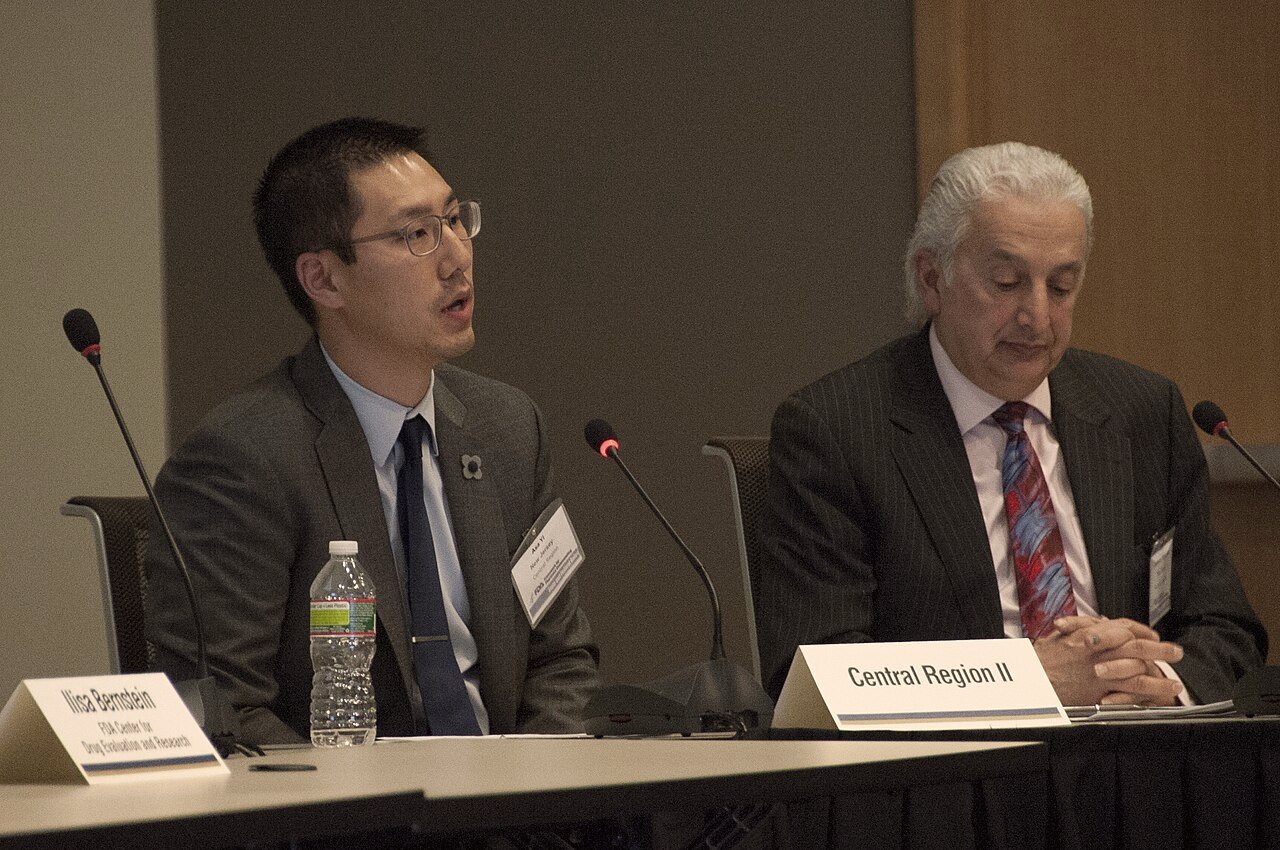
October 2024 — tirzepatide added. The FDA Pharmacy Compounding Advisory Committee voted in October 2024 to recommend adding tirzepatide to the 503A do-not-compound list, citing the safety and efficacy concerns of compounded versions during the brand-product shortage period. The vote did not immediately bind compounding pharmacies, but it set the policy direction.
Compounding-shortage end. Throughout 2024 and into 2025, the shortage exemption that allowed compounded semaglutide and tirzepatide to be legally produced began to wind down. FDA confirmation that the brand product was no longer in shortage removed the legal cover under which compounding pharmacies had operated. The compounded GLP-1 market — which had been substantial — contracted accordingly.
April 2026 — PCAC reaffirms. At the April 2026 PCAC meeting, the committee reaffirmed the compounding restrictions on the GLP-1 class, extending the regulatory direction set in October 2024. The practical effect: licensed-compounding-pharmacy access to GLP-1 compounds is permanently narrower than it was in 2023–24.
This track does not directly close research-peptide vendors. It closes the adjacent legal market — compounded telehealth GLP-1s. The closure of the legal adjacent market is part of why research-peptide vendors saw demand surges in the same window: buyers who could not access compounded telehealth shifted to the research-peptide channel.
Track 4: the July 2026 reversal on non-GLP-1 peptides
Enforcement is not the only direction of travel. On 23-24 July 2026 the Pharmacy Compounding Advisory Committee recommended six of seven nominated peptides - BPC-157, KPV, TB-500, MOTS-c, Semax and Epitalon
- for the 503A Bulks List, against the advice of FDA's own review scientists. Emideltide was rejected. FDA had already removed twelve substances from the Category 2 do-not-compound list on 15 April 2026.
None of that legalised anything, and none of it applies to the research-chemical channel this article tracks. It runs alongside the enforcement escalation rather than replacing it, which means a buyer in August 2026 faces a compounding track that is opening slowly and a research-vendor track that is closing quickly. The full breakdown is in our FDA peptide vote explainer.
Track 5: enforcement outside the United States
US enforcement is the loudest track but not the only one. In July 2026 Health Canada was granted a permanent injunction against Canlab Research, a retailer of unauthorised injectable peptides. The company can no longer sell, distribute or advertise those products in Canada. The action followed multiple prior warnings from the agency, which cited risks including hormonal imbalance, blood sugar disruption, liver and kidney damage, blood clots and tumour growth.
Australian regulators and pharmacists have raised parallel concerns, reporting adverse events including anaphylaxis, liver injury and injection-site infections tied to unapproved peptides sold online, including retatrutide.
The relevance for a buyer in any country is that a vendor shipping internationally is exposed to more than one regulator, and an injunction in one jurisdiction can take a supply line offline everywhere it served.
What this means for the buyer
Three takeaways from reading the chronology end-to-end.
Vendor closures are not random. Each of the three top-tier vendor shutdowns followed a public regulatory or quality signal that was visible months in advance. The closures were not the result of sudden crackdowns; they were the result of slow, public-record processes that buyers had the option to track but mostly did not.
The Warning Letter is the single most useful public signal. A vendor named in a Warning Letter — and especially a vendor named in the September 2025 sweep — is a vendor on a track that frequently leads to either restructuring or closure. The FDA Warning Letters database is searchable by company name; it is the first place to check before ordering from any vendor.
The compounding track is the reason the research-peptide market matters. The squeeze on legal compounded GLP-1s is what created the demand pressure that the research-peptide market absorbed. As the compounding restrictions hold or extend, the research-peptide channel remains one of the few avenues through which a buyer can obtain GLP-1 compounds without a brand-product prescription. That is also the channel the FDA is most aggressively monitoring.
Sources
- FDA Warning Letters database — primary regulatory record
- FDA PCAC meeting materials — Oct 2024, Apr 2026 transcripts
- DOJ press releases — Amino Asylum, Paradigm Peptides
- The Peptide Catalog vendor closures timeline
- Muscle and Brawn: Amino Asylum raid coverage
- Janoshik public tests database — quality-collapse evidence for Peptide Sciences
- Internal: Janoshik 7,164-tests purity analysis, three vendors closed in 12 months