Lean mass loss on GLP-1 drugs (semaglutide, tirzepatide, retatrutide) runs 25-40% of total weight lost by default — matching what's seen in any rapid weight-loss protocol. Resistance training (2-3 sessions per week, compound lifts at progressive load) and elevated protein intake (1.6-2.2 g per kg lean mass) shift that ratio toward 80-90% fat loss in controlled trials. There is no peptide that prevents muscle loss without these two inputs. BPC-157, MOTS-c, and growth-hormone secretagogues do not reverse the muscle-protein-synthesis suppression at any documented dose.
What the body-composition data actually shows
The body-composition substudies are the part of the GLP-1 trial program most worth reading carefully, because they answer the question that almost every Reddit thread on tirzepatide and retatrutide eventually circles back to: how much of the weight loss is fat, and how much is muscle?
Tirzepatide — SURMOUNT-1 DEXA substudy. At the 15 mg dose, total weight loss at 72 weeks was approximately 21% of starting body weight. The DEXA-measured fat-mass loss accounted for roughly 75% of the total reduction; lean mass loss accounted for the remaining ~25%. A participant losing 20 kg total lost roughly 15 kg of fat and 5 kg of lean tissue.
Semaglutide — STEP body-composition substudies. At the 2.4 mg/week dose, total weight loss was approximately 15% at 68 weeks. The lean-mass fraction of total loss ran in the 30-40% range across published readouts — broader than tirzepatide's figure, in a smaller-weight-loss-magnitude trial.
Retatrutide — TRIUMPH-4. At the top dose, ~24% mean weight loss at 48 weeks; the lean-mass fraction tracks the tirzepatide pattern at roughly 25-30%. Because the total magnitude is larger, the absolute kilograms of lean mass lost can be larger even at a similar percentage.
These numbers are not unique to GLP-1 drugs. The older obesity literature — caloric-restriction trials, bariatric-surgery outcomes, very-low-calorie-diet studies — converges on the same default: a sustained caloric deficit produces a weight loss that is roughly 25-40% lean mass when no intervention is layered on top. The GLP-1 mechanism is not the special variable. The deficit is.
Why the loss happens
Three reinforcing mechanisms operate at once on a GLP-1 protocol.
The caloric deficit itself. Sustained negative energy balance reduces muscle protein synthesis and increases muscle protein breakdown. This is true of any deficit, regardless of drug.
Appetite suppression that disproportionately reduces protein intake. The GLP-1 effect on satiety lands hardest on the meals that take the longest to eat — and protein-rich meals require the most chewing time. Self-reported intake on GLP-1 protocols frequently shows protein dropping well below maintenance even when overall calorie reduction is appropriate. The substrate for muscle protein synthesis is not available.
Reduced spontaneous physical activity. Some GLP-1 users report fatigue and reduced motivation for movement during titration. Less mechanical loading of muscle accelerates the lean-mass loss curve.
All three are operating at once. The lean-mass fraction of the loss is not a side effect of the drug; it is the predictable outcome of the underlying physiology when no countervailing inputs are layered on.
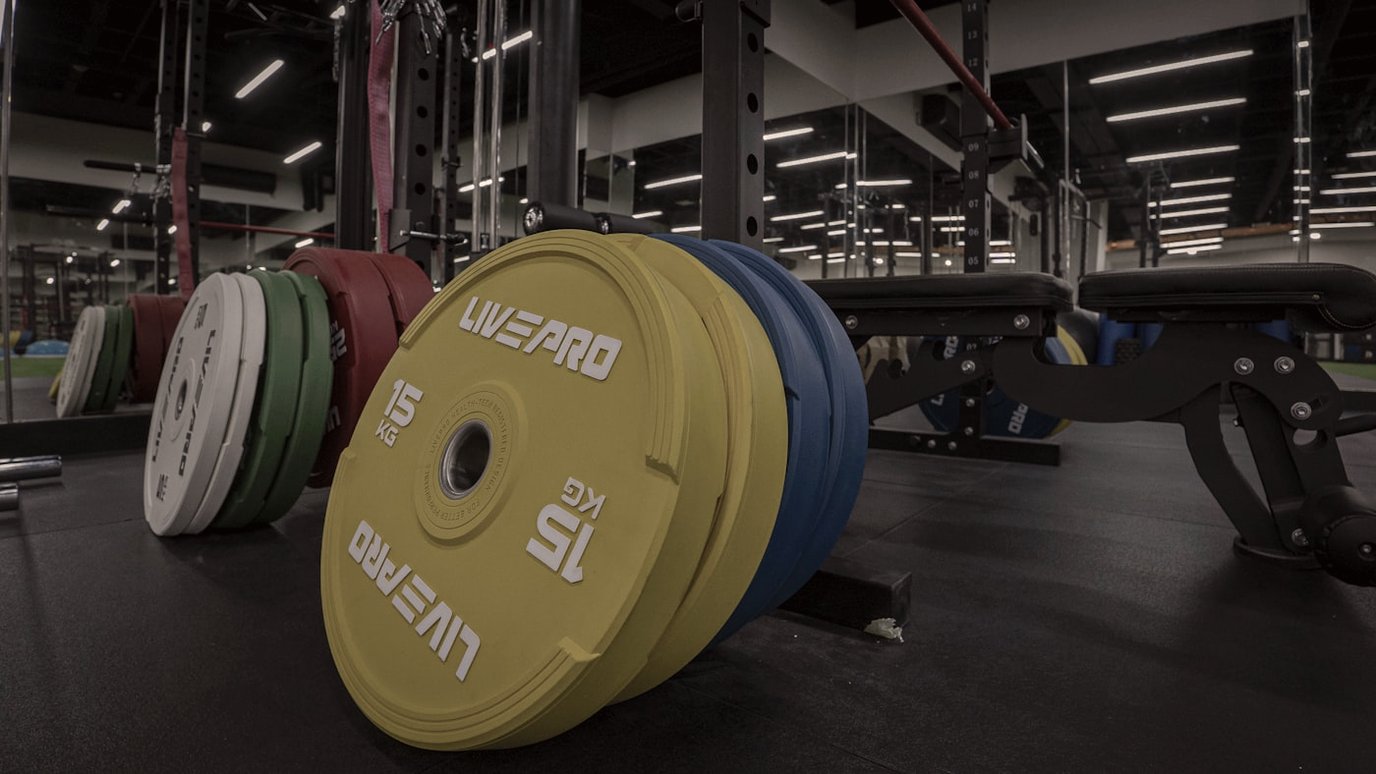
The two interventions with actual evidence
The literature on preserving lean mass during weight loss is decades older than any GLP-1 trial. Two interventions have controlled evidence; the rest do not.
Resistance training during caloric deficit. Multiple meta-analyses of resistance training during weight loss (Cava et al. 2017 and predecessors) demonstrate that 2-3 sessions per week of progressive resistance training shifts the lean-mass-loss fraction substantially downward. In the cleanest trials, the fraction of total weight loss that comes from lean tissue drops from ~30% (no training) to ~10-15% (with training) — meaning 85-90% of the loss is fat.
Elevated protein intake. The protein-intake literature for weight loss converges on 1.6-2.2 g per kg of lean body mass per day (Helms et al., 2014, British Journal of Sports Medicine review on protein for natural lifters). The mechanism is straightforward: higher protein availability protects muscle protein synthesis at a time when the systemic anabolic drive is reduced. Below ~1.2 g/kg, lean-mass loss accelerates. Above ~2.2 g/kg, no additional benefit is documented.
Combining the two interventions produces results substantially better than either alone. The combined-intervention literature was originally developed for athletes cutting weight and was later extended to clinical obesity populations. It applies cleanly to GLP-1 protocols — the deficit is the same physiology, regardless of how it was produced.
The protein math: per kg lean mass, not body weight
The most common protein-math mistake is dosing protein against total body weight instead of lean body mass. For a person carrying excess fat, the two numbers diverge significantly.
Worked example: 200 lb (90 kg) buyer at 25% body fat.
- Total body weight: 90 kg
- Fat mass: 22.5 kg
- Lean body mass: 67.5 kg
Protein target at 1.6 g/kg lean mass: 108 g/day. Protein target at 2.2 g/kg lean mass: 148 g/day.
Spread across four meals, that is 27-37 g of protein per meal — a chicken breast, a salmon fillet, a tuna can, a protein shake. On a GLP-1 protocol with early satiety, hitting that across four meals requires intentional prioritization: protein goes on the plate first, before the carbs or vegetables that fill the remaining capacity.
The error case is the person who eats 60-80 g/day on a GLP-1 protocol because appetite suppression dropped food intake across the board uniformly. At that intake, the lean-mass-loss fraction sits in the 35-40% range no matter what else the protocol does.
What about peptides as an adjunct?
This is the hardest part of the article to write honestly, because the marketing narrative around peptides on a GLP-1 protocol is dense and well-funded, and the evidence does not support it.
Two further compounds come up constantly here and are worth naming for what they are not. AOD-9604 is a growth-hormone fragment studied for fat metabolism rather than lean-mass retention, and 5-Amino-1MQ is a small molecule studied as an NNMT inhibitor, not a peptide at all. Neither has human evidence for preserving muscle during rapid weight loss.
BPC-157. The published BPC-157 literature is predominantly rodent data on tendon, ligament, and gut-tissue repair. Human controlled trials on muscle-mass preservation during caloric deficit do not exist. The marketing claim that BPC-157 prevents muscle loss on a GLP-1 protocol is not characterized in the trial literature at any researched dose.
MOTS-c. The mitochondrial-derived peptide has interesting preclinical data on insulin sensitivity and metabolic homeostasis. It is not characterized as a muscle-mass-preservation compound in published human trials.
Tesamorelin and other GH secretagogues. Tesamorelin is FDA-approved for HIV-associated lipodystrophy and produces modest body-composition shifts via endogenous GH pulses. The published trials measure visceral adipose reduction, not muscle-mass preservation during caloric deficit. Ipamorelin, CJC-1295, and similar GH secretagogues have even thinner human trial data.
The honest framing: these compounds may have legitimate research-protocol applications. Reversing the muscle-protein-synthesis suppression of a caloric deficit is not one of the applications with controlled-trial evidence. The two interventions that do have evidence are protein and resistance training. Adding a peptide stack on top of those is adjunctive at best; substituting a peptide stack for those is the protocol equivalent of buying a paint job before the engine.
What the Reddit community is reporting
The signal across the Reddit threads on this topic is consistent enough to mention as a pattern, with the standard anecdotal-data caveat: the people who report acceptable body-composition outcomes on GLP-1 protocols are predominantly the ones who report continuous resistance training and intentional protein-target hitting. The people reporting "I'm losing weight but I feel weak / I look smaller / my clothes fit strangely" are predominantly the ones reporting that they did not change their training and ate whatever appetite allowed.
This is not controlled data and the selection bias is obvious. But the pattern matches what the trial literature predicts at the protocol-input level. The threads worth reading on this point: "Don't do Reta without lifting weights" (219 comments), "muscle loss prevention while on mounjaro" (168 comments), "There are no peptides for muscle growth" (288 comments). The plural-of-anecdote is consistent with the literature; the literature is consistent across the published trials.
When to talk to a doctor about it
Three measurements are worth having before and during a sustained GLP-1 protocol if body composition matters to the protocol's success.
DEXA scan baseline. A pre-protocol DEXA gives a reference for lean mass, fat mass, and bone mineral density. A follow-up DEXA at 6-12 months provides the actual answer to "what did I lose." Without this, the lean-mass-loss question is answered by the bathroom scale, which cannot distinguish fat from muscle.
IGF-1 if any GH-axis protocol is being added. Adding tesamorelin or any GH secretagogue on top of a GLP-1 protocol modifies the IGF-1 axis. Baseline and follow-up IGF-1 measurement is the minimum the GH-axis literature supports for any extended protocol.
Functional strength tracking. The cheapest version of body-composition monitoring is whether maintenance lifts (squat, deadlift, bench, overhead press) hold at constant load through the deficit. Strength retention is the proxy for muscle retention that requires no equipment beyond what the lifting protocol uses anyway.
The medical-conversation framing on all three: these are conversations to have with a clinician who is comfortable with metabolic and endocrine workups, not with a peptide vendor's customer-support inbox.
Related reading
- Retatrutide vs Tirzepatide — comparative read of the two compounds covered in the body-composition data above
- Retatrutide side effects — what the published Phase 3 trials report on tolerability and dose-titration
- Tesamorelin vs HGH — companion comparison on the GH-axis side of the adjunctive-peptide conversation
- Methodology — how the trial-data and pricing references on this site are collected
Sources
- Jastreboff AM et al., NEJM 2022 — SURMOUNT-1 tirzepatide for obesity
- Wilding JPH et al., NEJM 2021 — STEP-1 semaglutide for weight management
- Jastreboff AM et al., NEJM 2023 — retatrutide Phase 2
- Helms ER et al., J Int Soc Sports Nutr 2014 — protein intake for natural physique athletes
- Cava E, Yeat NC, Mittendorfer B. — Preserving healthy muscle during weight loss. Adv Nutr 2017
- Internal: Retatrutide vs Tirzepatide, Retatrutide side effects, Tesamorelin vs HGH, Methodology
Frequently asked
How much muscle do you lose on Mounjaro/tirzepatide?
The SURMOUNT-1 body-composition substudy (DEXA) reported that roughly 25% of the total weight lost on tirzepatide at the top dose was lean mass — meaning a participant who lost 20 kg total lost approximately 5 kg of lean mass. This figure is comparable to what is seen in semaglutide trials (STEP body-composition substudies, ~30-40% lean mass loss without intervention) and any other rapid-weight-loss protocol. The number is not unique to GLP-1 drugs; it is the default for any sustained caloric deficit.
Can a peptide stack prevent muscle loss on GLP-1?
No documented peptide stack reverses or prevents muscle loss on a GLP-1 protocol at researched doses. BPC-157, TB-500, MOTS-c, and growth-hormone secretagogues (tesamorelin, ipamorelin, CJC-1295) are sometimes marketed for "recovery" or "lean mass preservation" but the controlled trial data does not support muscle-loss prevention as a primary endpoint. The two interventions with actual evidence are resistance training and protein intake. Peptides are adjunctive at best.
How much protein should you eat on a GLP-1 protocol?
The protein-intake literature for weight loss converges on 1.6-2.2 g per kg of lean body mass, not total body weight. For a 90 kg person at 25% body fat (67.5 kg lean mass), that is 108-148 g of protein per day. The GLP-1 challenge is appetite suppression and early satiety: hitting that target requires intentional protein prioritization at each meal, since the alternative is under-eating protein and accelerating lean mass loss.
Does retatrutide cause more or less muscle loss than tirzepatide?
The TRIUMPH-4 retatrutide readout reports lean mass loss as a fraction of total weight loss in a range comparable to tirzepatide's SURMOUNT-1 figure — roughly 25-30% lean mass at the top dose. Because retatrutide produces more total weight loss (~24% vs ~21%), the absolute kilogram lean-mass loss can be larger in absolute terms even at a similar percentage. The relevant lever is still protein and resistance training, not the choice between compounds.
What about creatine?
Creatine monohydrate (3-5 g/day) has the strongest evidence base of any supplement for resistance-training adaptation and is commonly recommended during caloric deficits to preserve performance. It does not by itself prevent muscle loss without resistance training; it potentiates the training response. The evidence is broader and older than any peptide-stack literature.
When should I add a tesamorelin or BPC-157 protocol?
Add adjunctive protocols only after the two main levers (protein and resistance training) are in place. Tesamorelin is FDA-approved for HIV-associated lipodystrophy and produces modest body-composition shifts via endogenous GH pulses; it is not characterized as a muscle-preservation drug. BPC-157 has predominantly rodent data on tendon and tissue repair, not human muscle-mass preservation. Both sit downstream of the protein + lifting layer in any honest reading of the evidence.