On July 23-24, 2026, FDA's Pharmacy Compounding Advisory Committee voted to recommend six of seven nominated peptides for the 503A Bulks List - BPC-157, KPV, TB-500, MOTS-c, Semax and Epitalon - and rejected the seventh, emideltide (DSIP). Every vote was narrow and FDA's own scientists had recommended against all seven. The vote is advisory only. None of the six became legal to compound that day, and the notice-and-comment rulemaking that would make them legal may not conclude before 2027. Nothing about the vote changes the legal status or the quality of research-grade peptides sold online.
Six of seven peptides were recommended. None of them became legal. On 23 and 24 July 2026, FDA's Pharmacy Compounding Advisory Committee voted to recommend BPC-157, KPV, TB-500, MOTS-c, Semax and Epitalon for the 503A Bulks List, and voted down emideltide. Every one of those votes was narrow, and FDA's own review scientists had recommended against all seven. A recommendation is where the process starts, not where it ends. As of today no licensed pharmacy in the United States can lawfully compound any of the six, and the rulemaking that would change that has not begun in earnest.
The second thing worth saying immediately: this vote does nothing for the market most people reading this actually buy from. Compounding pharmacies and research-chemical vendors sit under different sections of federal law. A vial bought online is exactly as legal, and exactly as unverified, as it was on 22 July.
What did the FDA peptide committee actually vote on?
Seven bulk drug substances, nominated for inclusion on the 503A Bulks List, which is the register of ingredients a traditional compounding pharmacy may lawfully use when preparing an individual prescription.
| Peptide | Vote | Result | Nominated indication |
|---|---|---|---|
| BPC-157 | 8-6, 1 abstention | Recommended | ulcerative colitis |
| KPV | 8-6, 1 abstention | Recommended | wound healing, inflammatory conditions |
| TB-500 | 8-6, 1 abstention | Recommended | wound healing |
| MOTS-c | 7-5, 2 abstentions | Recommended | obesity, osteoporosis |
| Semax | 8-5, 1 abstention | Recommended | cerebral ischemia, migraine, trigeminal neuralgia |
| Epitalon | 7-4, 1 abstention | Recommended | insomnia |
| Emideltide (DSIP) | 6-7, 1 abstention | Rejected | opioid withdrawal, insomnia, narcolepsy |
Vote tallies as reported by McDermott Will and Emery's meeting summary, 2026. Not one recommendation cleared by more than two votes. Shift a single seat on BPC-157, KPV or TB-500 and the count is 7-7.
Did FDA's own scientists support this?
No, and that is the part of the story most coverage buried. Agency review staff recommended against every one of the seven nominations, citing insufficient safety data, insufficient efficacy data, and incomplete characterization of the substances themselves.
On BPC-157 the staff position was blunt. Reviewers pointed to a lack of evidence supporting effectiveness for the nominated indication and wrote that the peptide is not well-characterized, so the agency cannot establish quality standards for it. That is a manufacturing-controls objection, not a clinical one, and it is worth sitting with: FDA is saying it does not currently know enough about what BPC-157 is to write a specification for it.
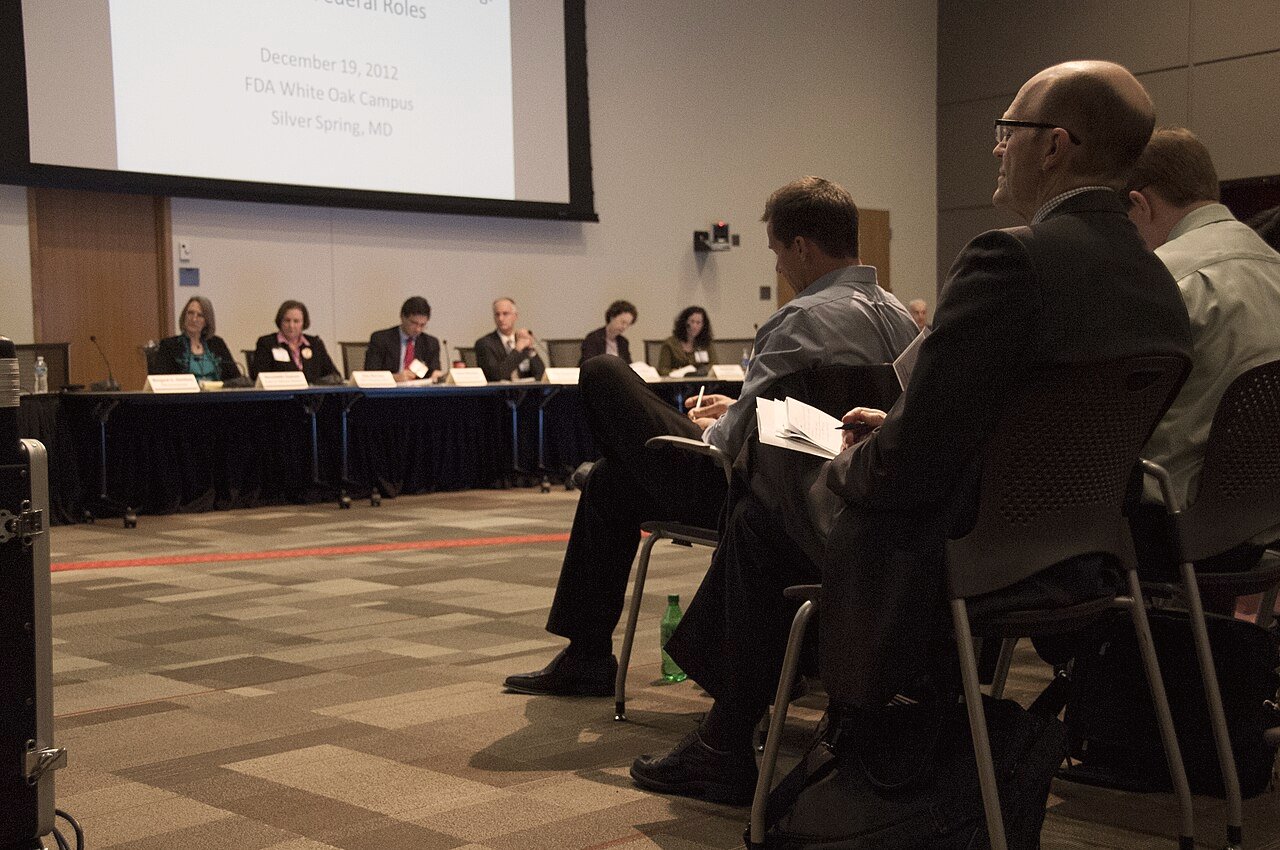
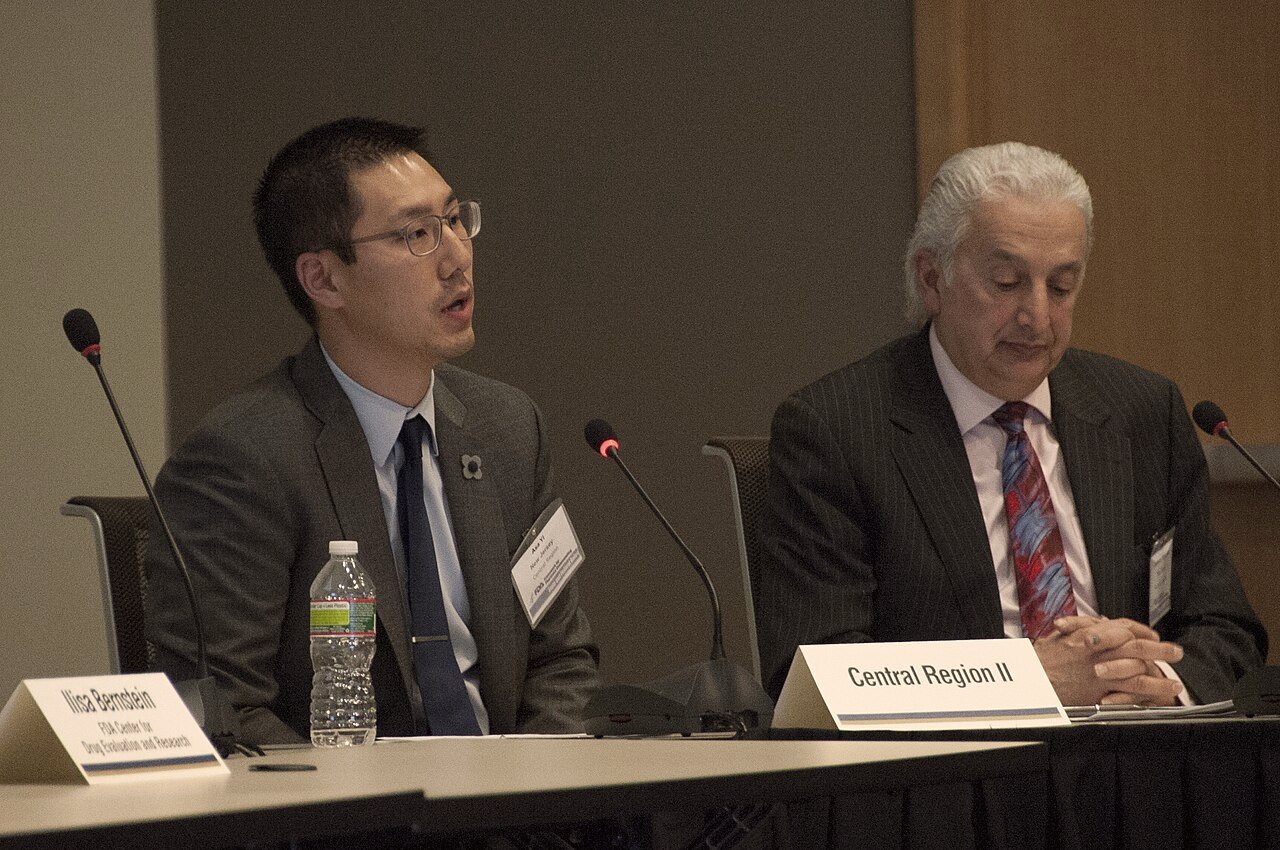
The committee voted the other way anyway. Advisory committees are not obliged to follow staff review, and FDA is not obliged to follow advisory committees.
_(8294447799).jpg)
_(8295506986).jpg)
Does this make BPC-157 legal?
No. There are three separate gates and the vote cleared one of them.
  APRIL 2026            JULY 2026              NOT YET                 NOT YET
  ┌──────────────┐      ┌──────────────┐      ┌──────────────┐      ┌──────────────┐
  │ Removed from │ ───→ │ PCAC votes   │ ───→ │ FDA proposed │ ───→ │ Final rule.  │
  │ Category 2   │      │ to recommend │      │ rule + public│      │ Substance is │
  │ (12 peptides)│      │ (6 of 7)     │      │ comment      │      │ compoundable │
  └──────────────┘      └──────────────┘      └──────────────┘      └──────────────┘
        DONE                  DONE               not started            2027+
Gate one closed on 15 April 2026, when FDA announced it would remove twelve substances from the Category 2 do-not-compound list. Gate two closed in July. Gates three and four are the ones that matter legally, and both are outstanding.
The trap in the middle of this is Category 2. Coming off the do-not-compound list sounds like permission and is not. Removal from Category 2 does not make a substance eligible for compounding under section 503A. These substances sit outside FDA's interim enforcement discretion policy, which currently extends only to Category 1 substances. There are three positions available, not two, and all six recommended peptides are parked in the gap between them.
FDA has two routes forward. It can run notice-and-comment rulemaking to formally add the peptides to the 503A Bulks List, which legal analysts expect to reach 2027 at the earliest and could extend into a multi-year process. Or it can grant interim Category 1 status, which would let pharmacies compound under enforcement discretion while rulemaking continues. The agency has not said which it will do.
Which twelve peptides came off the do-not-compound list?
The April 2026 Category 2 removal covered more compounds than the committee later voted on, and this has gone largely unreported. Five of the twelve were never on the July agenda at all.
| Substance | On the July PCAC agenda? |
|---|---|
| BPC-157 | yes, recommended |
| Emideltide (DSIP) | yes, rejected |
| Epitalon | yes, recommended |
| KPV | yes, recommended |
| MOTS-c | yes, recommended |
| Semax (heptapeptide) | yes, recommended |
| TB-500 (thymosin beta-4 fragment) | yes, recommended |
| Cathelicidin LL-37 | no |
| Dihexa acetate | no |
| GHK-Cu, injectable routes | no |
| PEG-MGF | no |
| Melanotan II | no |
Those bottom five are in a stranger position than the six that were voted on. They are off the do-not-compound list, they have no advisory recommendation behind them, and they are not on the bulks list. Anyone claiming GHK-Cu or melanotan II got cleared in July is wrong twice over.
Does the vote change anything for research peptides bought online?
Nothing at all, and this is where the misreading is going to do real damage.
Section 503A governs what a licensed pharmacy may prepare against a prescription for an identified patient. Peptides sold online as research-grade reagents are not compounded drugs and never were. They fall under FDA's unapproved-drug and misbranding authorities, which the July vote did not touch. The two markets are demand-linked, as we covered in the 503A and PCAC explainer, but they are legally separate, and enforcement against online vendors has been accelerating, not easing.
The predictable consequence is a marketing wave. Expect vendor product pages and affiliate posts to start describing BPC-157 as FDA-backed, FDA-cleared, or newly approved. All three would be false. A narrow advisory recommendation for pharmacy-compounded use, still years from taking legal effect, says nothing about the contents of a vial shipped from an unnamed facility.
What it says about quality is likewise nothing. The failure modes that matter when you are holding a research vial - underdosed content, wrong compound entirely, a certificate that does not resolve to any lab record - are unaffected by a change in compounding law. Those are covered in our vendor failure taxonomy, and the only defence remains the same one: make the certificate resolve. Our COA verifier checks a certificate against the issuing lab's own record rather than the vendor's copy of it.
What happens if the six do become compoundable?
Worth thinking about now, because it reshapes the buying decision rather than ending it.
If FDA grants Category 1 status or completes rulemaking, the six move from a gray market into a regulated one. A patient with a prescription could obtain BPC-157 from a 503A pharmacy operating under state board oversight, USP standards, and pharmacist accountability. That is a materially different product from a research vial, and for anyone currently buying online because there was no lawful route, it would be the better one.
It would also move the trust question rather than answer it. Compounding pharmacies are not uniform. We already track this on the compounded GLP-1 side, where the distance between the best and worst 503A operators is wide. "Which pharmacy" is a real question with real variance behind it, and it is the question that would replace "which vendor".
The near-term reality is less interesting than either scenario. For at least the rest of 2026, and plausibly well into 2027, the legal status of all six is unchanged.
Bottom line
An advisory committee narrowly recommended six peptides for a list they are not yet on, against the advice of the agency's own reviewers, through a process with two more gates to clear. Treat any claim that BPC-157, TB-500, MOTS-c, Semax, Epitalon or KPV became legal, approved, or cleared in July 2026 as a signal about the person making the claim.
If you want the compound-level detail, our guides to BPC-157, KPV, TB-500, MOTS-c, Semax and Epitalon each carry the research status, the regulatory position, and the third-party purity data we hold for that compound. The two worth reading first are KPV, which is the cleanest compound in our entire certificate corpus, and BPC-157, which is the most-tested and holds the single worst result. We will update this page when FDA moves on either route.
Sources
- FDA, Pharmacy Compounding Advisory Committee meeting, 23-24 July 2026 - primary meeting record
- McDermott Will and Emery, PCAC meeting summary - vote tallies and procedural next steps
- Frier Levitt, Category 2 removal analysis - the twelve substances and what removal does not do
- Regulatory Focus (RAPS), advisory committee coverage - FDA staff review positions
- Science, FDA committee votes to make peptides more widely available - 24 July 2026
- Internal: 503A and the PCAC, FDA peptide enforcement 2024-2026, how peptide vendors fail
Frequently asked
Are BPC-157 and TB-500 legal now after the FDA vote?
No. The July 2026 PCAC vote was a recommendation to FDA, not a decision by FDA. Compounding a substance under section 503A requires it to be on the 503A Bulks List, and adding it takes notice-and-comment rulemaking that FDA has not completed. Until that finishes, or FDA separately grants interim Category 1 status, compounding BPC-157 or TB-500 remains outside the agency's enforcement discretion policy.
What did the FDA peptide vote on July 23-24, 2026 decide?
The Pharmacy Compounding Advisory Committee voted on seven peptides over two days and recommended six for inclusion on the 503A Bulks List. BPC-157, KPV and TB-500 each passed 8-6 with one abstention, MOTS-c passed 7-5 with two abstentions, Semax passed 8-5 with one abstention, and Epitalon passed 7-4 with one abstention. Emideltide, also called DSIP, was rejected 6-7 with one abstention.
Which peptides did the FDA remove from the do-not-compound list?
On April 15, 2026, FDA announced the removal of twelve substances from the Category 2 do-not-compound list: BPC-157, cathelicidin LL-37, dihexa acetate, emideltide (DSIP), epitalon, injectable GHK-Cu, KPV, PEG-MGF, melanotan II, MOTS-c, semax and TB-500. Removal from Category 2 does not make any of them eligible for compounding on its own.
Does the PCAC vote affect research peptides sold online?
No. The compounding track and the research-chemical track are separate legal regimes. Section 503A governs what a licensed pharmacy may prepare against a prescription. Peptides sold online as research-grade reagents are governed by FDA's unapproved-drug and misbranding authorities, which the vote did not touch. A vendor citing the vote as evidence its product is now approved is misreading it.
When will compounded BPC-157 be available at pharmacies?
There is no confirmed date. FDA must run notice-and-comment rulemaking to add any substance to the 503A Bulks List, a process legal analysts expect to reach 2027 or extend into a multi-year timeline. FDA could move faster by granting interim Category 1 status, which would allow compounding under its enforcement discretion policy while rulemaking continues, but it has not said whether it will.
Why did FDA scientists recommend against the peptides?
Agency review staff recommended against all seven nominations, citing insufficient safety data, insufficient efficacy data, and incomplete moiety characterization. On BPC-157 specifically, staff wrote that the substance is not well-characterized and that the agency cannot establish quality standards for it without further information. The committee voted against that recommendation.