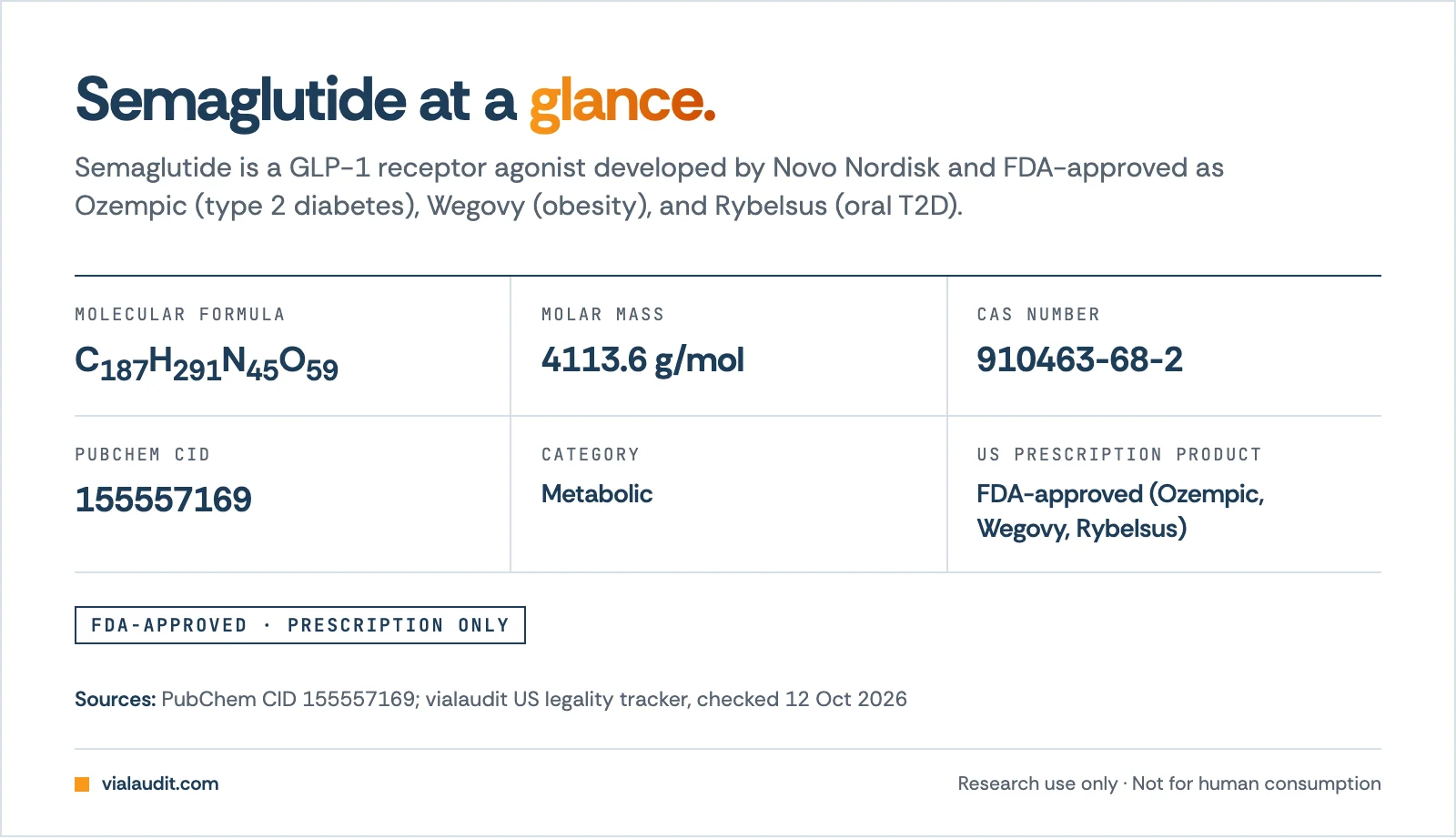
Semaglutide is a GLP-1 receptor agonist developed by Novo Nordisk and FDA-approved as Ozempic (type 2 diabetes), Wegovy (obesity), and Rybelsus (oral T2D). It mimics the GLP-1 hormone, increasing insulin release, slowing gastric emptying, and reducing appetite. The research-grade material sold by peptide vendors is the same molecule but is not pharmaceutical-grade.
Research notes
How does Semaglutide work?
Semaglutide is a long-acting GLP-1 receptor agonist developed by Novo Nordisk. It's the first compound in the modern GLP-1 weight-loss class, FDA-approved across three brand names — Ozempic, Wegovy, Rybelsus — for partly overlapping indications.
What doses are used in research?
Standard escalation goes 0.25 → 0.5 → 1.0 → 1.7 → 2.4 mg weekly. The 2.4 mg dose is the peak per-week weight-loss target used in the STEP trials.
What the lab record shows
Our purity study pools 2,087 public lab results from Kovera Labs, Janoshik and four vendor-published certificate sets, with duplicate test numbers counted once.
| Measure | Semaglutide |
|---|---|
| Results | 41, from 20 clients |
| Median HPLC purity | 99.92% (41 results; lowest 98.43%) |
| Median content vs label | 111.5% (38 results) |
| Under 90% of label | 0 of 38 |
| Under 95% of label | 0 of 38 |
| More than 110% of label | 22 of 38 (57.9%) |
| Failed identity | 0 |
Twenty clients is a narrow base, so one vendor's habits can move these figures. Vendors also choose which batches to send to a lab and which certificates to publish, so the unpublished population is likely worse. Purity alone cannot catch a wrong molecule; check that a certificate reports a mass-spec identity result as well as HPLC purity.
You can open any Kovera certificate by report number in our Kovera index, and Janoshik reports in our Janoshik index.
Which vendors carry Semaglutide?
Semaglutide remains the best-covered compound in the research-vendor market — every audited vendor lists it. Pricing has compressed significantly through 2025–2026 as more vendors entered. Lower-tier vendors increasingly differentiate on price; top-tier vendors compete on COA quality.
What it's researched for
- weight loss
- type 2 diabetes
- cardiovascular risk reduction
Where to source it
ALL 10 VENDORS →10 audited vendors stock Semaglutide, but the price walk hasn't captured a current listing for it. See all 10 vendors →
Frequently asked about Semaglutide
What is semaglutide?
Semaglutide is a synthetic peptide that mimics the human GLP-1 hormone. It binds the GLP-1 receptor with high affinity, increases insulin secretion, slows gastric emptying, and reduces appetite. It was developed by Novo Nordisk and is FDA-approved under three brand names.
What's the difference between Ozempic, Wegovy, and Rybelsus?
All three are semaglutide. Ozempic is the once-weekly subcutaneous injection approved for type 2 diabetes. Wegovy is the higher-dose once-weekly subcutaneous injection approved for obesity. Rybelsus is the oral daily tablet approved for T2D. Research-grade semaglutide from peptide vendors is the same molecule but is not labeled or distributed for human use.
Is research-grade semaglutide the same as Ozempic?
The molecule is the same; the formulation, sterility chain, and regulatory oversight are not. Pharmaceutical Ozempic is sterile, dose-standardized, and dispensed under prescription. Research-grade semaglutide is laboratory material with vendor-published COAs but no pharmaceutical-grade quality system. The compounded-pharmacy 503A pathway in the US is a separate regulatory question.
What doses are used in semaglutide research?
Published research most often references 0.25–2.4 mg weekly subcutaneous, mirroring the FDA-approved Wegovy titration ladder (0.25 → 0.5 → 1.0 → 1.7 → 2.4 mg). Half-life is approximately 7 days. Doses are cited as research-protocol references, not human-use recommendations.
What is the typical purity of research-grade semaglutide?
In the 2,087-result lab record behind our purity study (Kovera, Janoshik and four vendor-published sets, duplicates counted once), semaglutide has 41 results from 20 clients. The median HPLC purity across all 41 is 99.92%, and the lowest is 98.43%. None of the 38 results with a measured content held under 95% of label; the median was 111.5%. None failed identity. These are results vendors chose to publish, not a random sample.